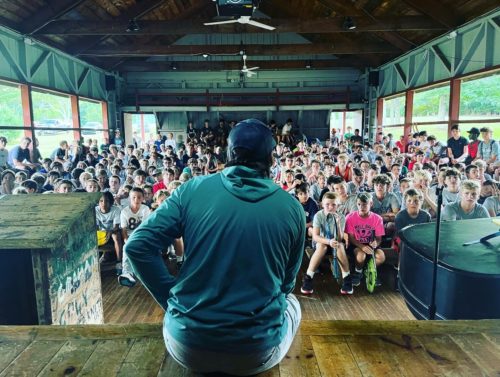
Earlier this summer, when I was in Columbus Ohio to speak to the Boy Scouts, I was invited to throw the first pitch at a baseball game. Believe it or not, I got the ball right over home plate!
Here’s the video to prove it:
For the minority here in the US, it’s called soccer. But whatever you call it, here’s an interesting story about the Blind World Championships. I think I’ll stick to climbing, skiing, biking, and kayaking.
Wow. What a sufferfest! Racing the Leadville Trail 100 mountain bike race is easily one of the hardest things I have ever done; it’s almost 15,000 feet of elevation gain, most above 10,000 feet.
As with most great endeavors, it started over a couple beers at a block party in a neighbor’s garage. I bet this was the way the Wright Brothers first discussed the possibility of flight or Einstein pondered the theory of relativity. My neighbor, John Lemon, had been one of my main tandem mountain bike partners for several years, known for his fast and fearless descents. I loved screaming down narrow mountain trails, leaning left and right a fraction of a second behind John. Also the thrill of hitting sizeable bumps which would have sent me rocketing over John’s head if not for my clipless pedals. My favorite line from John is, “Hang on! I think we can do this, but if we fall, just don’t fall right.”
We were standing around the keg when John threw out the challenge, “Wanna ride Leadville?” I naively asked, “What’s that?” Soon a lively discussion ensued and next thing I know, I’ve agreed with gusto! The next morning the realization hit me—I’d just agreed to ride one of the hardest single day bike races in the country, and I’d never even done a mountain bike race before.
Getting in wasn’t a sure thing, though, since a major movie, Race Across The Sky, came out last year. The movie got tons of attention, partly because Lance Armstrong had clobbered the competition with a time of 6:28:50. Countless cyclists were inspired to enter. In fact, over 8,000 people entered the lottery for only 1,500 spots. So John and I contacted the race organizer (Ken Chlouber) to see if he’d let us in. Ken obviously figured any blind person who was stupid enough to ask was his kinda guy.
With the reality of our undertaking upon us, John and I trained hard much of the spring and early summer. What I love about John is that he’s the perfect representative of a Colorado weekend warrior. He’s got a very demanding job at the high-tech company, Cisco, plus a wife and two kids. But at the break of dawn, he can be found aggressively hammering up steep, technical trails around Golden, often returning home with bruised ribs, sprained wrists, oozing trail rash, bloody gashes, and at least once, a separated collar bone.
So for several months, my typical routine was get up at 4:30 AM and pound some breakfast and coffee. John would lightly knock at the door around 5:30 AM, and we’d ride up Look Out Mountain or Golden Gate Canyon. On weekends, we’d go out on long mountain rides, once a killer 75 mile day up to Rollins Pass from the east side, over to Winter Park, and back again; crossing the Continental Divide twice. At the top the temperature dropped to 40 degrees with pounding hail, but at least there was lightening!
On our first long rides, John and I found it was hard to take in the massive amounts of calories needed not to bonk half way through the day; dry energy bars were really hard to choke down, and more satisfying things like sandwiches took too long to eat. We were previewing part of the Leadville course when a veteran racer gave us a helpful nutrition tip: “During the race, forget solid food; usually you’re too nauseated anyway to eat.” He turned us on to Ensure, a quickly absorbed energy drink—250 calories in eight ounces and about five seconds to swallow.
We also managed to support the local bike industry with a constant need for service and part upgrades to my Ellsworth tandem bike. Repairs ranged from replacing hydraulic fluid, brake pads, and scorched rotors, to a multitude of busted chains, spokes, and wheels. In the Ellsworth’s defense, few bike frames or bike parts are designed sturdy enough to take the massive stress of two 175 pound riders plus a forty pound frame pounding down a steep rocky 3,000 foot mountain pass.
At last, the big day arrived! John and I, plus Skyler Williams, our support crew, woke at 4 AM to prepare but none of us really slept much. My stomach was full of butterflies, and I had a hard time downing any food, though I did force myself to eat. By 5:30, we were at the start line with a wall-to-wall crowd of hardcore cyclists, crew, and family. You could smell the adrenaline in the air, as well as the overflowing port-a-potties!
When the shotgun went off at 6:30, we were off and peddling…and wondering what we’d gotten ourselves into. The weather was cloudless, with a cold nip in the air. Later it would warm up and get hot, but never as brutally hot as one of our scouting rides a month earlier when John and I both ran out of water.
With 1,328 cyclists, including pros like Levi Leipheimmer, all charging to the same hill a few miles away, a massive bottleneck was inevitable. The first climb, called St. Kevin, quickly turned into a hike-a-bike since one person getting off meant all behind them had to dismount too. Things began to thin out by the second big climb so more of it was rideable.
Then came the scariest part of the day, the nasty descent down the Powerline road with its heinous ruts and double fall lines. I called it, “Crazy Town,” because folks were veering and weaving and stopping in front of us. A guy rode up behind me, clipping my handle bars in the process. I instinctively nudged him, and he careened off into the woods. We stopped to make sure he was not hurt and then kept riding. Further along in the ride he came up behind us and called out “Erik, I competed against you in Primal Quest!” We passed one guy unconscious on his back on the side of the trail with paramedics around him. Another guy endoed right in front of us and landed on his back; John had to brake fast and whip around him.
We rode rolling terrain and some single track the rest of the way to the second aid station at Twin Lakes; so far, we were on schedule, beating the four-hour cut-off by 30 minutes. Here is where the road kicks up big time, going from about 9,200 feet to the Columbine Mine at 12,600 feet in just eight miles. It was brutal. John got a bad cramp in his leg which slowed us down a little. We found ourselves behind an endless line of riders who were pushing their bikes up the loose steep sections nearing the top. We couldn’t pass, since bikers were now flying by on the left on their way back down. We were moving at a crawl, but part of me welcomed the pace since I was gasping for air. John and I started having our first doubts whether we’d be able to make the final cut-off of twelve hours.
At 6 hours and 5 minutes, we finally reached the summit. Fifty long miles from Leadville, we turned around to reverse the entire course. Blasting down the jeep road, we passed all those folks who had passed us on the way up. Because of all the extra weight, tandems crank on the downhill’s. We used the 40 minute descent to recover and rehydrate. It was a relief to get back to the Twin Lakes Aid Station where we were met by our support crew—including my wife, Ellie, and two kids, Emma and Arjun. They were waiting to swap out our water bladders and Ensure.
No rest for the weary, John and I charged on ahead in our race against the clock. About 70 miles into the ride, at the top of the single track climb, we only had a small section of rooted trail to get past. Because of the way tandems sit it is difficult for John to lift the front tire even a few inches. Well, one of the roots was a few inches high. John thought we could ride through it with just a little lift but was sadly mistaken. Before we knew it we were on the ground; not even time to unclip or put a hand down. At least the dirt was soft. We laid there for a few seconds feeling total defeat. But then the voice in our heads start yelling “I commit, I will not quit!” We brushed ourselves off and kept on with the sufferfest.
At some point, it all became a blur of pain and enduring. We were back to Pipe Line in another hour fifteen minutes and on to Power Line, the impossibly steep 1,500 foot hill we had come down earlier in the day. Getting a second wind, John and I pedaled up the first part of Power Line past dozens of folks who were pushing. The volunteers were incredible, cheering, “Go tandem. Go!” One particularly hyper guy jumped out and ran behind us yelling at the top of his lungs, “Don’t quit, tandem. You gotta want it!” John got a boost of energy when his 10 year old son, Ben, was standing on the side of the road waving and saying “Good job Dad and Erik.” It was an awesome feeling for John to see him standing there cheering us on!
After an endless ascent to the summit, we screamed down Sugar Loaf and hit a paved road for another long climb. My butt was starting to feel like a mule had kicked it, my legs were losing steam, and I found myself thinking, “I don’t care about the cut-off. Just let this suffering end now.”
There was still plenty of climbing to go, up another jeep road to the top of St. Kevin, then one last huge descent. We only had an hour until the cut-off. At the bottom of the hill, we thought we only had a mild three-mile ascent up a paved road to the finish, but we were sadly mistaken. The course had been changed. The climb was actually up another steep rocky dirt road, much slower than we had anticipated. Time was ticking away, along with our hope for a pre-twelve hour finish. I remember screaming to John, “We’re not going to finish.” John yelled back, “Yeah we are.”
To make it in time, we needed to do the last three miles at six-miles per hour or better. We were both totally blasted. I was now the one with a bad leg cramp. We were cranking with everything we had. We flew by another dozen people pushing their bikes up the last hills. John checked the odometer: we were averaging 10 miles per hour. We finally hit the paved road for a last hill. As we topped out, I could hear the crowds, at least a thousand people cheering like crazy. Neither of us let up. The cheering crowds helped pull us in. As we slowed down, I began to recognize some familiar voices—Emma and Arjun who were running beside us shouting, “Go Daddy go!” And then, it was over.
We crossed the finish line after 11 hours 44 minutes and 23.5 seconds. Out of the eleven tandem teams that started, we were the ninth to cross the line. The winning team, Andy and Cara Applegate from Black Mountain North Carolina, set a new tandem course record in an astounding 8 hours, 42 minutes, and 14 seconds! Of course, their combined age was a youthful 77 while we were the oldest team with a combined age of 89 years of experience.
For breaking the 12 hour barrier, John and I earned the coveted silver belt buckle that we will wear with pride. But the real prize was training, racing, and finishing with John. Those 5:30 mornings had paid off.
Sure I’m the first blind person to do it. But I’m really just an athlete like anyone else out there that day. John struggled even harder than most—imagine yourself piloting a long, heavy tandem and wrestling that beast for almost twelve hours at altitude. And there were lots of similar heroic stories out there by people from 48 states and 21 countries.
John and I both have to thank our wives for putting up with all of the weekends lost to training and the frequent bike banter. After I finished Leadville, I was wiped out and happy to put the bike away for a long while, vowing to never return. However, as a few days pass, I’m starting to wonder if we could do it faster…shhhh, don’t tell Ellie.
Here’s a short video of our finish:
Keep your eyes out for Race Across The Sky 2, appearing in theaters on November 4th. This incredible documentary will show Levi breaking Lance’s course record by 12 minutes. And there’s a pretty good chance that John and I will be in there too. The producers say this will be even better than the original—I can’t wait!
Last week, our Soldiers To The Summit team (http://soldierstothesummit.org/) got everyone together for an amazing training session here in Colorado. Though we’ve all been in virtual contact for the past few months, this was the first opportunity for everyone on the expedition to meet in person. (The only climber missing was Luis Benitez. But since he was still heading home from an attempt on K2, we’ll cut him some slack!)
We started off by meeting at Bent Gate Mountaineering in Golden, which is a great outdoor retailer that has been helping us with their expertise on gear. This is where we distributed the clothing that has been generously donated by our sponsors (ADS Tactical, Polartec, and Mountain Hardwear). The soldiers were also fitted with boots provided by La Sportiva. We are still working on rounding up some more equipment for the team (climbing gear, sleeping bags, trekking poles, etc.) but it’s looking like our soldiers will be well protected.
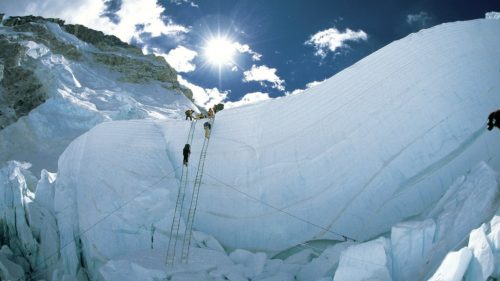
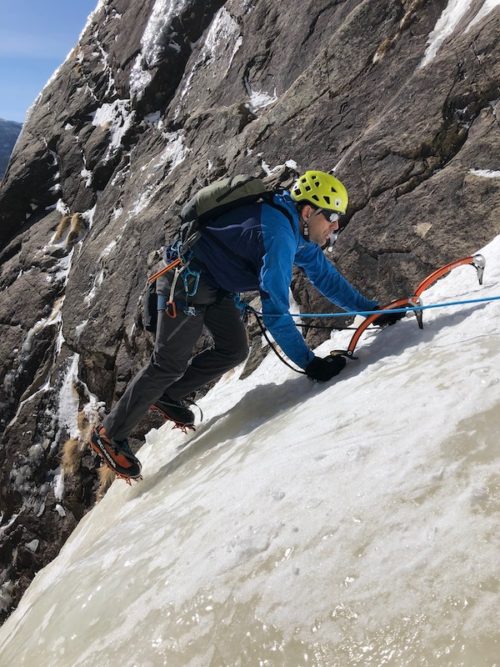
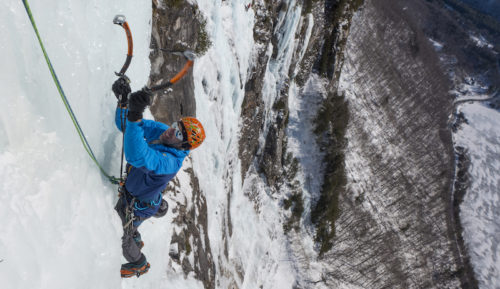
The next day, we headed up to St. Mary’s Glacier, which is a steep snowfield (it lost it’s official glacier status decades ago but the name hasn’t changed) at about 11,000 feet west of Denver. Although a couple of our soldiers–the two Hanging Chads and Matt–have experience climbing on snow and ice, the majority have never used an ice axe or worn crampons. Here we practiced skills such as ascending and descending fixed lines, self-arresting on snowslopes, and the basics of how to walk with 12 sharp points strapped to the bottom of each foot. I think most of our soldiers found this an eye-opening, and breathtaking, experience!
Our group camped for two nights at the base of the glacier. This gave us a chance to escape the “real world” down below and get to know each other better. While all the training is vital, this quite time is also an important part of building a team.
The next morning, we got an early start to climb James Peak, a 13,294 feet mountain that requires climbing the snowfield, trekking across the tundra, and then a final scramble up the summit pyramid. Though not technically hard, this gave everyone a chance to experience rugged, off-trail hiking and thin air. Unfortunately, Matt’s temporary prosthetic broke so he had to stay in camp, which is why these shake-down trips are essential before big expeditions. The rest of us made the summit and returned to camp in about six hours; a pretty good pace.
In short, this training trip was a huge success! We accomplished our mission, began to make connections with one another, figured out what works, discovered what doesn’t, sorted out gear details, and had a lot of fun. A phone call from President Bush was a great bonus. Organizing this expedition to Lobuche has been a lot of work for many of us. And I’m starting to feel like it’s going to pay off hugely. Can’t wait till we leave in October!
Here are some photos of the training courtesy of our team photographer Didrik Johnck.
Everest climbers Chris Morris and Charlie Mace set the rope on St. Mary’s glacier.
Soldier Zach Martinez practices a self-arrest on a mellow slope before progressing to steeper terrain. Yes, he did have the ice axe tucked up by his chest.
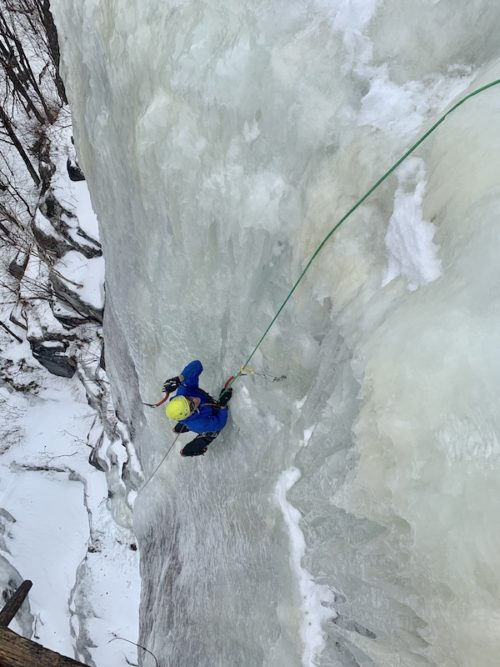
Soldier Nicolette Maroulis tops out after climbing a very steep 60-foot snow and ice slope on St. Mary’s glacier.
Soldier Katherine Ragazzino tops out after climbing a very steep 60-foot snow and ice slope on St. Mary’s glacier.
Yours truly in my stealth gray outfit. The photographers insist I’ll be wearing less boring colors in the future.
Solider Ike Isaacson gets aggro while learning the art of picking your way up a snow slope with crampons, ice axe, and ascender.
The Soldiers to the Summit team is made of up people with varying disabilities including amputees.
Soldier Chad Butrick prepares to rappelling down the glacier.
The Soldiers to the Summit team in lock step at 12,000 feet on the slopes of James Peak on a nice summer day.
Soldiers Dan Sidles, Ike Isaacson, Cody Miranda, and Steve Baskis (left to right) celebrate the summit of James Peak at 13,294 feet.
Last week, we held our training session for the soldiers on our upcoming expedition. These men and women have all sacrificed greatly in behalf of our country. Our goal on this climb is to both give back to these heroes and to inspire others.
We all met in Golden, Colorado before heading up to the mountains to practice the skills needed for climbing on steep snow and ice. Before heading up to the hills, our team had a very special call from none other than former President George W. Bush. He spoke individually with each team member and offered some words of encouragement. President Bush told the team that he was “really proud you’re setting an example” for others with disabilities.
Whether you agree with his politics or not, it is significant that our former Commander-In-Chief reached out to these soldiers to support their cause. After President Bush first learned about our expedition, he took a personal interest in not only what these soldiers are attempting but also in their stories. His comments to the team were indeed both inspirational to us as a whole but also to each individual.
We are happy and grateful to receive any and all support possible! It doesn’t matter if you are Democrat or Republican, apolitical or anarchist, we can all agree that a team of people with significant disabilities tackling a daunting challenge is commendable!
Our Soldiers To The Summit Expedition is getting more good media attention. Here is an article in The Denver Post about our recent training session.
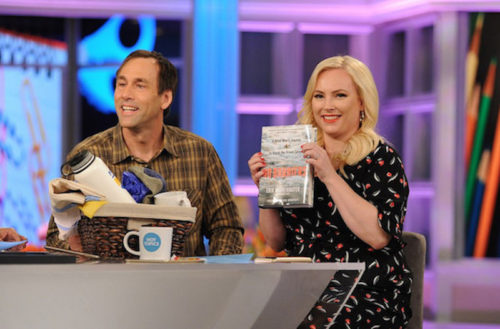
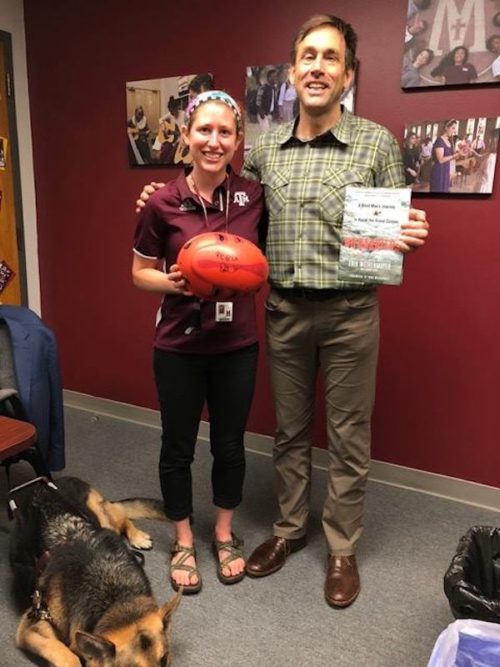
I’ve recently received a few advance copies of my newest book and am super excited! Although it bears the same name as the previous edition, this new deluxe version is infinitely better. We completely re-worked the text to make it more readable, I’ve added numerous stories from my adventures to illustrate points, and there are over 30 color photos.
For those of you who have attended one of my talks, this deluxe edition of The Adversity Advantage both reinforces my message and expounds upon many of the concepts. If you haven’t heard me speak yet, this book will give you a good idea of my main themes. Keep in mind that I customize my talks for each audience and there isn’t time to hit on every point we discuss in this book.
The first copies are due at Amazon.com shortly! You can place your order now and books will ship as soon as they arrive. For larger quantities (20 or more) or packages with my other books and videos, you can order through my web site but we can’t give you a delivery date just yet.
As many of you know, I’m racing the Leadville 100 bike race in about ten days. Here’s a recent interview I gave about this craziness to Outside magazine’s blog.
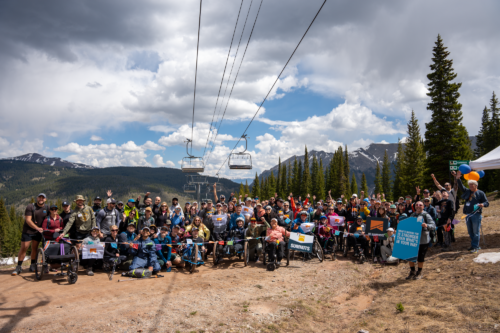
In late June, we held the 4th annual Adventure Team Challenge (ATC) and it was definitely the best race yet! If you missed my previous blog post, this is a two-day event where each 5-person team has at least two disabled athletes, one of whom is a wheelchair user.
Among the things that made this year’s race so special was the spectacular new location, near Leadville Colorado, the highest township in the country, at 10,200 feet. We mountain biked up steep single-track trails, zip lined across the Arkansas river, and rafted powerful whitewater—all with giant, snowcapped peaks above.
Even better than the setting were the inspiring people. As you can imagine, it took a lot of work to recruit teams, so I came into the race just a little burnt out. However, ATC has a way of re-energizing me. We had a lot of injured military participants this year, and it’s hard to feel burnt out when you witness their amazing efforts.
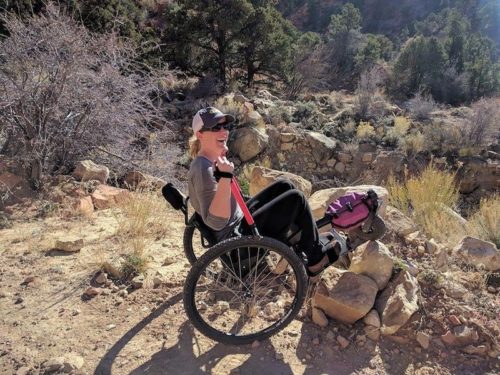
For example, Army Ranger Matt Nyman—one leg amputated and the other with limited use—mountain biking steep rocky trails. He fell down several times, but kept getting up and pushing on. Then there was Airborne Infantry Sergeant Neil Duncan who lost both legs in a helicopter crash; he peddled the entire course in off-road handcycle…and he had never ridden one before! And Marine Danny Kennedy, shot twice, once in the face, while attending to the injuries of a fellow soldier. After many surgeries, he is still paralyzed on his right side, but completed the entire race with his team (all injured in combat), exhausted yet triumphant.
The highlight for me was a non-military participant, Clarissa Olivares-Pozgaj—just 15 years old. Clarissa is in a wheelchair and has very limited use of her body because of arthrogryposis, a rare congenital disorder that results in stiff joints and abnormal muscle development. Her team, which included her father, designed a bike trailer/chariot with knobby tires and helped tow her across the high country. Her teammate, Ned Harding said, “The chariot was very heavy. None of us knew the difficulty of terrain we would be traveling through. Incredibly tough trails that were much narrower than Clarissa’s wheelbase. It was a ton of work, but totally worth it.”
At the finish line, all the participants and volunteers gave Clarissa and her team a standing ovation. A lot of folks were crying, including Clarissa. Afterwards, I considered all the challenging elements of the course—the whitewater, the zip line, the long paddle—and I asked her dad if they did this kind of crazy stuff a lot. He responded with surprise, “Clarissa’s never been off the pavement.” When I heard that, I teared up too.
Clarissa and her team gave me a great gift that day, since she represents the very reason why I created ATC. It forces all involved to push to their absolute personal limit, to give up ego, and for the individuals to come together to work as a collective force. It’s a valuable lesson for athletes, for business, and for living.
Speaking of that, I’m proud to report that our team, Team Lumber Liquidators, won for a second year in a row. After two days of racing, we finished in 8 hours 55 minutes, only beating a determined Team Cisco by 24 minutes. And Team Alteryx—Clarrisa’s team—came in fourth, just 54 minutes behind us!
We had some new strong horses on my team, including Scot Swaney, winner of last year’s 24 Hours of Triathlon, and my colleague, Skyler Williams. We didn’t win on the basis of physical prowess, but because we know how to work together and problem solve.
For instance, after a whitewater section, we had to paddle our raft several miles across Twin Lakes. The equipment list suggested to bring a sail, but it was rather vague. However, our teammate Rob Harsh came prepared with a tarp, two metal poles and some line. His sail was so effective that, when the wind gusted, we were moving so fast across the lake that our raft was leaving a wake. Our teammate Sarah Will commented, “Rob’s sail was brilliant and I could just see the other team’s jealousy when it flew. I felt like a cunning pirate.”
On the running sections, Rob would guide me, while Skyler and Scott helped tow Sarah who was on a handcycle. These trails were steep, narrow, winding, and very rocky—with big drop offs—so it took a ton of focus and coordination to keep Sarah rolling and not flipping over. On really rocky sections Scott carried Sarah, while Skyler hauled the handcycle, and I carried the heavy pack.
The only tough part came during the zip line, which spanned across the Arkansas River and was spectacular. Even though the safety guy tested it beforehand, he was a lot lighter than me and used his own pulley. When I clipped in and started zipping across, I noticed I was going way too fast. The only thing I could do was to keep my legs out in front of me to try and brace my feet against the opposite bank. Not being able to see, it was really scary!
Unfortunately, I came in way too fast and slammed my shin against a rock. My teammate Skyler was 100 yards away on the other bank and said later it sounded like a two by four splitting in half. My leg had a series of gashes from ankle to knee and I was pretty sure it was broken. I couldn’t even stand up, so finishing the race seemed doubtful. But it’s amazing what a little first aid and 800 milligrams of ibuprofen can do. I limped through the rest of the day and managed to stay a bit ahead of Team Cisco, who were gunning for us this year. Glitches do happen, but next year, we’ll make that section safer.
And yes, we are starting to think about next year! The details are still being worked out but we already have one major new sponsor, Alteryx. They sponsored a team this year and are so excited that the company is committing considerable resources. The 5th edition promises to be bigger and better than ever!
I admit that because ATC was my idea, I am closer to it than most. But these testimonials make it clear that ATC has become a powerful force for everyone involved.
Clarissa is still riding high after her adventure, “I am feeling wonderful since the race and I still can’t believe what has been accomplished. This event has been such a great experience for all of us. It has not only shown us good problem solving, but how to truly work together as a team and never to give up. My mom has actually said that she feels that I have matured a lot during the race. I would love to do this ATC over and over again. Right now, I feel that I can accomplish anything I put my mind to.”
Chad Martin, a volunteer supporter for Team Alteryx wrote, “This past weekend was something that will forever be one of the best experiences of my life. Even as a spectator to ATC, I quickly realized (once again) that teamwork continues to be a critical life skill no matter the setting. As this was the first time Team Alteryx ever participated in an event like this, our goal was simply to finish the race in one piece. At the end of the two days , we realized that what we had accomplished was so much more.”
My teammate Sarah, who is a paraplegic shared this, “What ATC means the most to me is that some see me as an athlete who does athletic endeavors like this all the time, and I don’t. I would have never imagined that 20 years ago, when I was thinking about all the things I would never be able to participate in again, that I would be back in the wilderness where I am most happy.
I like the fact that there are no trophies but bragging rights only. I was most impressed by Clarissa’s team because it changed my perspective on how strong these teams really are. Even if this was a once in a lifetime event for her, she has done something amazing that her peers may never be able to imagine her doing or never even come close to doing themselves. She can now show them that she stands on top of the mountains and glides with the rivers. This experience helps me learn so much about myself and the love we all share for each other.
I like hanging with you adventure racers types because the embarrassing moments just get thrown out the window and dismissed because we all push our bodies to the breaking point and eventually, well…shit happens, deal with it, done. Some day, my body is going to give out and it means so much that my quality of life has been enhanced by participating in this crazy event. Thanks for the smiles, the mud, the blood, the sweat and the tears!”
Here is a short video with some of the highlights of this years event:
Thanks to Peter Wayne for the great photos!