Skip to Content | Sitemap

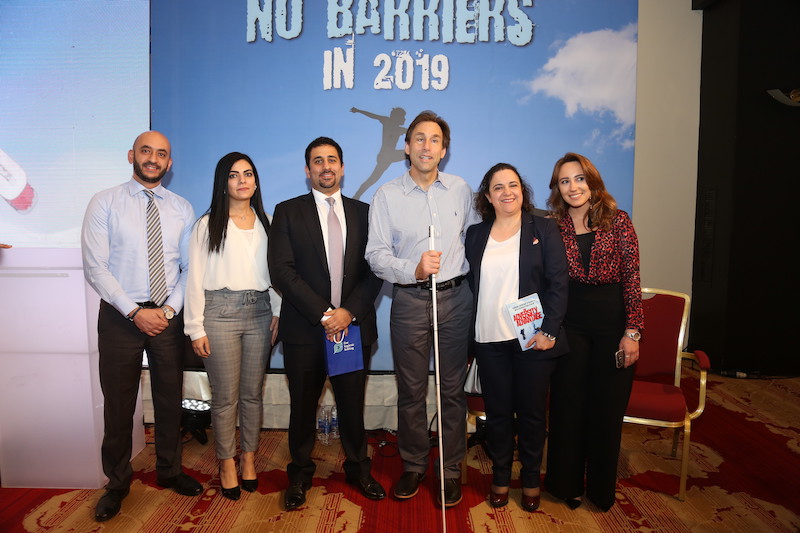
Erik Weihenmayer giving a speech

Motivational Speaker

Erik's motivational speaking career has taken him around the world, from Hong Kong to Switzerland, from Thailand to the 2005 APEC Summit in Chile. He speaks to audiences on harnessing the power of adversity, the importance of a strong "rope team" and the daily struggle to pursue your dreams. Clearly, Erik's accomplishments show that one does not have to have perfect eyesight to have extraordinary vision.

A partial list of his corporate clients includes Google, Bank of America, General Mills, Procter and Gamble, Wal-Mart, Cisco Systems, Hilton, Computer Associates, Abbott, IBM, Merrill Lynch, Cingular, General Electric, Baxter, American Express, Wells Fargo, Microsoft, Morgan Stanley, and UBS.

Erik has shared the speaking platform with notables like Mayor Rudy Giuliani, General Norman Schwarzkopf, and President George Bush, and authors Tom Peters, Marcus Buckingham, and Stephen Covey.

Request Information

Typical Themes Addressed in Erik's Presentations

Shattering Expectations:

Erik inspires audiences to have the vision to dream big; the courage to reach for near impossible goals; and the grit, determination, and ingenuity to transform our lives into “something miraculous.” Erik's daring adventures have shattered the perceptions of people all over the world about what is possible in our lifetimes. Time Magazine wrote, “There is no way to put what Erik has done in perspective because no one has ever done anything like it. It is a unique achievement, one that in the truest sense pushes the limits of what man is capable of.” “Often,” Erik says, “we are forced to throw out the expectations of others and rise to the level of our own internal potential.” He emphasizes the importance of having a vision. “A vision is deeper than a goal, more complex. It's where all our goals spring from. It's how we see ourselves living our lives, serving other people.” Erik asks what kind of legacy do we want to leave behind. He describes vision as “an internal compass guiding us through the storm.”

Alchemy - Using Adversity as an Advantage:

Erik believes that inside each of us is a light, which feeds on adversity. "The greater the challenge, the brighter that light burns. It can make us more focused, more driven, more creative, and can even transcend our own limitations and give our lives power. He tells about those people whom he calls "alchemists," constantly turning the lead of their lives into gold. " With an alchemist, you can throw them into the midst of a fierce competitive environment, strip away their resources, throw road blocks in front of them, and they'll still find a way to win - not despite adversity, but because of it." He demonstrates how alchemists, rather than avoiding or circumventing adversity, harness its energy and use it to propel themselves into greatness. "Imagine," Erik offers, "if adversity was no longer your enemy, but your ally, no longer an impediment, but the pathway."

Teamwork - The Only Way To Cross A Glacier Is On A Rope Team:

Erik speaks with authority on the subject of teamwork. His Mt. Everest expedition holds a world record for the most people from one team to stand atop Everest in a single day. Time Magazine referred to his team as one of the best ever on the mountain. "The key is to surround yourself, not just with people of talent, but with people who don't buy into the notion: Seeing is Believing, but know the opposite is true: Believing is Seeing." Often, the key to his endeavors has been his superb ability to combine his strengths and talents with those of people around him. "In an environment riddled with pitfalls, roping up with good people is the best chance we have. Imagine your team roped together, building upon each other's strengths, growing day by day. You know if you fall, someone will stop you. If someone else falls, you stop them; it's just automatic. People might have different responsibilities, different goals, even motives, but you link together behind one vision. The scope and power of that kind of team is unstoppable."

Climbing Blind:

On Erik's first rock climb at age 16, three years after going completely blind, he learned to do a pull-up with one hand and to scan with the other across the face. "One thing hasn't changed in the twenty years I've been rock climbing," he says. "That's the reach. We calculate and predict. We hope and pray. All our measurements lead us to believe we'll find what we are looking for, but we know there are no guarantees. It's that moment when we've committed to the reach, and we know it's almost impossible to turn back." He knows the reach can be paralyzing, but he also knows that "life is an ongoing, never-ending process of reaching into the darkness when we don't know what we will find. We're constantly reaching towards immense possibilities; they may be unseen yet they are sensed, while most people allow the darkness to paralyze them."

Pioneering Possibilities:

Erik doesn't see himself as a crazy risk taker, but as a problem solver, an innovator. He is motivated by a sense of discovery and what is possible. He creates a plan and moves forward methodically. Along the way, he creates an array of systems, strategies, and tools which make his adventure safer, more efficient, more productive. In combination, these can be the difference between success and failure. "A blind guy," he says, "gets pretty good at creating secret systems for doing what others may take for granted." He describes learning to ice climb. One critic told him that ice climbing is impossible for a blind person. "You have sharp heavy metal tools in your hands. You can't swing them indiscriminately at the face or you'll knock a huge chunk of ice down, the size of a refrigerator, which will crush you." So Erik learned to ice climb in a totally different way. He learned to feel through the tips of his tools. When he feels a weak spot in the ice, he'll tap the tool lightly against the face and listen for the pitch. He says, "People thought you had to see to climb, but I've found that the most exciting, and torturous, aspect of life is when we reach beyond convention and find creative ways to cross through those blurry lines between what the world sees as impossible but what we believe in our hearts to be fully possible."

Leadership - Guess Who Is A Better Climber In The Dark?:

There are times for each of us when we know we're the best person to take "the sharp end of the rope" (the lead in rock climbing terms). Erik tells about the time he and his partner, a much better climber, were caught on a dangerous rock face at nightfall, without working headlamps. Despite his fear, he knew this was his time to lead his friend down to safety. "A leader isn't always the strongest or the fastest, but the person with the vision and the courage to act." Erik believes the most important part of leadership is "how we pass it on to others." He tells about an expedition when he and his Everest team led six blind Tibetan teenagers to 21,500 feet on the north side of Mt. Everest. "Blind kids who were sold into slavery, who were tied to beds in dark rooms, and who were told they were blind because they had evil spirits inside them, all stood higher than any team of blind people in the world. "Leadership is contagious," he says, "We pass it from body to body, from life to life, and we give all the people around us the courage to do great things."

For more information on Erik, call Leading Authorities Inc. at 1-800-Speaker.